- 54
Muskrat
Artist: Ash (Mark R. Watson)
Medium: Oil and gold leaf on canvas
Date: c. 2024
The Work
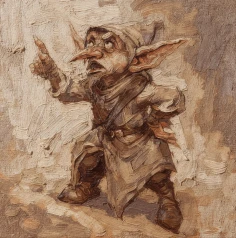
In "Muskrat," Ash shows a haunting, skeletal figure that rises from a field of violent, textured orange. The subject is painted in deep blues and blacks, with glimpses of gold leaf across the torso. This is a key part of the artist’s "Midas touch" style, which contrasts decay with divinity. The figure's long limbs and sharp, yellowed eyes create a sense of frantic, primal energy. It captures a character that feels both human and elemental.
Context and Inspiration
This piece visually interprets the traditional folk song "Muskrat," famously recorded by Appalachian musician Doc Watson. The lyrics describe the muskrat as a persistent, scavenging creature:
"Muskrat, muskrat, what makes you smell so bad? / Laying around the farmer's house, eating up all he had."
Ash turns this humble, thieving animal into a humanoid spirit of hunger and survival. The "M" visible on the figure’s palm likely references Native American folklore, where the muskrat is a humble hero who dives into ancient waters to retrieve the mud used to create the world. In Ash’s hands, "Muskrat" becomes a reflection on the beauty found in the "muddy" work of life—celebrating the strength of those who survive on the edges.
About the Artist
Mark R. Watson, known as Ash, specializes in highly tactile, expressionistic portraits. His work often examines themes of personal mythology and resilience, portraying the transformation of pain into art, symbolized by his regular use of gold leaf. He founded Spun One Productions and continues to create pieces that connect traditional folk storytelling with modern abstract expressionism.
Medium: Oil and gold leaf on canvas
Date: c. 2024
The Work
In "Muskrat," Ash shows a haunting, skeletal figure that rises from a field of violent, textured orange. The subject is painted in deep blues and blacks, with glimpses of gold leaf across the torso. This is a key part of the artist’s "Midas touch" style, which contrasts decay with divinity. The figure's long limbs and sharp, yellowed eyes create a sense of frantic, primal energy. It captures a character that feels both human and elemental.
Context and Inspiration
This piece visually interprets the traditional folk song "Muskrat," famously recorded by Appalachian musician Doc Watson. The lyrics describe the muskrat as a persistent, scavenging creature:
"Muskrat, muskrat, what makes you smell so bad? / Laying around the farmer's house, eating up all he had."
Ash turns this humble, thieving animal into a humanoid spirit of hunger and survival. The "M" visible on the figure’s palm likely references Native American folklore, where the muskrat is a humble hero who dives into ancient waters to retrieve the mud used to create the world. In Ash’s hands, "Muskrat" becomes a reflection on the beauty found in the "muddy" work of life—celebrating the strength of those who survive on the edges.
About the Artist
Mark R. Watson, known as Ash, specializes in highly tactile, expressionistic portraits. His work often examines themes of personal mythology and resilience, portraying the transformation of pain into art, symbolized by his regular use of gold leaf. He founded Spun One Productions and continues to create pieces that connect traditional folk storytelling with modern abstract expressionism.
Properties
- File type : PNG image
- File size : 19.25 MB
- Dimensions : 4096 x 4096 pixels